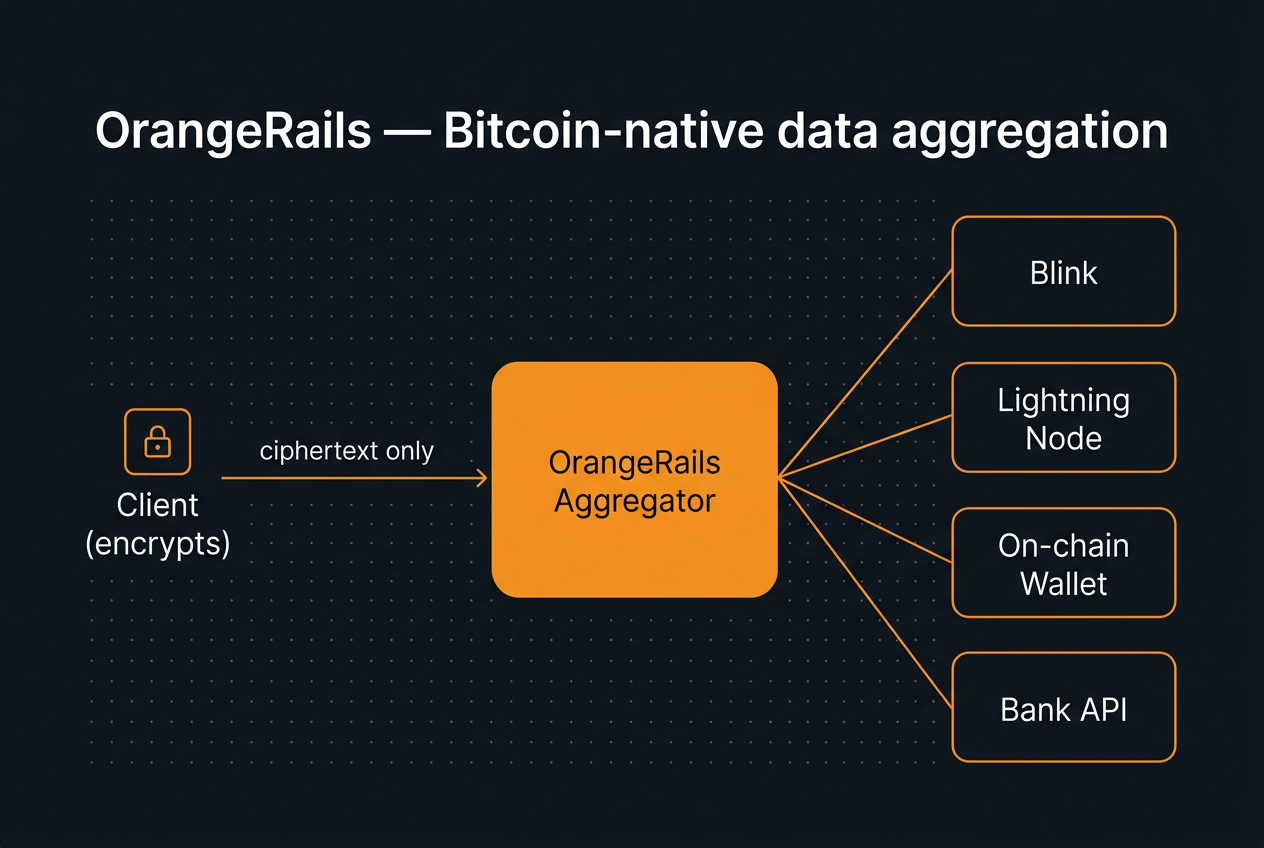
A research & engineering lab

The freedom-tech stack for Bitcoin applications.

Software your operator cannot read. Apache 2.0, Bitcoin-native — privacy by architecture, not by promise.

Apache 2.0Bitcoin-onlyNo alt-coinsNo keys heldNo closed sourceNo tracking

Why this matters

Privacy is not a feature. It is the foundation of every system we depend on — and the one most software has quietly removed.

Bitcoin ZKA Lab builds on four pillars of principle. Cypherpunk discipline. Bitcoin sovereignty. Human dignity. Human rights. Different traditions; same architectural conclusion: software should not be able to read its users.

Cypherpunk principles

Privacy is necessary for an open society in the electronic age.
— Eric Hughes, A Cypherpunk's Manifesto (March 9, 1993)

Three decades ago the cypherpunks named the architectural problem we still have today: software with the ability to read its users will, eventually, be compelled to do so. They named the answer too — write code, ship cryptography, make privacy the default. We're a continuation of that line.

Bitcoin principles

The Times 03/Jan/2009 Chancellor on brink of second bailout for banks.
— Satoshi Nakamoto, Bitcoin Genesis Block coinbase (January 3, 2009)

Bitcoin was born as a structural answer to institutions that fail. Its core invariant is sovereignty: the user holds the keys, the network refuses to ask permission, and no third party can debase, freeze, or surveil the asset. Bitcoin solves money. We extend the same invariant to the software around it — accounting, finance, aggregation, support.

Human dignity

Arguing that you don't care about the right to privacy because you have nothing to hide is no different than saying you don't care about free speech because you have nothing to say.
— Edward Snowden, Permanent Record (2019)

Privacy is not the cover for wrongdoing. It is the precondition for autonomy, intimacy, dissent, and conscience. Software that strips it is not neutral; it is a slow, structural cost on every user who happens to fall inside its data model — even one who has done nothing wrong, today.

Human rights

Anyone born into a reserve currency like the euro, yen, or pound has financial privilege over the 89% of the world population born into weaker systems.
— Alex Gladstein, Check Your Financial Privilege (2022)

For the 6.2 billion people living under authoritarian regimes, weak currencies, or capital controls, software that betrays its users is not an inconvenience — it is the difference between financial software and a surveillance database. Bitcoin gives them money the state can't confiscate. Bitcoin ZKA Lab gives them the rest of the stack.

Different pillars. Same architecture. Software that cannot read its users — by mathematics, not by promise.

This is for

The journalist in Tehran whose bookkeeping can't be seized.

The small business in Detroit whose accounting SaaS was just breached.

The donor in Toronto whose account was frozen for a $20 contribution.

The Bitcoin user anywhere on Earth who refuses to be the product.

Everyone is the threat model

Zero-knowledge architecture is a freedom-tech building block — and a basic cybersecurity primitive. Almost every breach, ransomware event, gag order, and account freeze of the last decade is a story this architecture would have ended differently.

BreachDecember 2022

LastPass

Encrypted vault backups exfiltrated from cloud storage. Master passwords cracked offline. Krebs on Security and TRM Labs have linked the stolen vaults to $35M+ in downstream cryptocurrency theft through 2025 — and counting.

ZKA outcome

Client-encrypted vaults with strong key derivation and per-user secrets remain ciphertext after server theft. The breach surface degrades from 'every user' to 'users with weak passwords' — a closeable surface.

BreachMay–July 2017

Equifax

147.9M Americans, 15.2M Britons, and 19,000 Canadians had their names, dates of birth, addresses, and Social Security numbers exfiltrated in plaintext. Unpatched Apache Struts vulnerability and plaintext credentials on internal systems.

ZKA outcome

Identity records encrypted at rest with user-derived keys. A server-side breach yields ciphertext, not the population's SSNs. The 2019 FTC settlement cost Equifax $575M+; the architectural cost of preventing this was roughly zero.

Government requestOngoing — every quarter

18 U.S.C. § 2705(b)

Under the U.S. CLOUD Act and Section 2705(b), the government can compel a cloud provider — Google, Apple, Microsoft, Verizon — to hand over your data AND order them not to tell you. Major providers receive thousands of these orders per year. You may never learn that your data was accessed.

ZKA outcome

The operator has only ciphertext to hand over. There are no user keys on the server, no plaintext data at rest, and structurally nothing to gag about. A lawful warrant must be served on the user — who has rights, due process, and the option of legal counsel.

Account freezeFebruary 2022

Emergencies Act

The Canadian government invoked the Emergencies Act and froze ~$7.8M across 200+ bank accounts — including supporters who had given as little as $20 to a legal protest. In 2024, the Federal Court of Appeal ruled the invocation was unconstitutional and violated Charter rights to free expression and peaceful assembly.

ZKA outcome

Bitcoin already sidesteps the freeze itself. Zero-knowledge software around Bitcoin means donor lists, accounting records, and support conversations are not a parallel compliance trail an emergency order can compel into existence.

The pattern

Every one of these stories is a story about plaintext at rest in someone else's database. Enterprise SaaS in 2026 still works the same way it did when LastPass was breached: the operator holds the data and the keys. Zero-knowledge architecture is the only architectural answer that survives all four scenarios at once. Compliance frameworks help. Insurance helps. Audit logs help. None of them is structural. ZKA is.

The regulatory moment

Between 2025 and 2027, three global crypto-tax reporting regimes come online. Together with existing surveillance authorities, they create mandatory data pipelines that authoritarian regimes — and breach actors — will weaponize.

January 1, 2025
United States

IRS Form 1099-DA

Crypto brokers must report every user's name, address, TIN, and transaction history to the IRS. Cost-basis reporting mandatory January 1, 2026.

irs.gov — Form 1099-DA final rule →
January 1, 2026
European Union

DAC8 Directive

EU directive mandating automatic exchange of crypto-asset information between member-state tax authorities. Reporting Crypto-Asset Service Providers must collect and share user TINs, wallet addresses, and transaction data.

ec.europa.eu — DAC8 →
2027 (rollout)
OECD — 48+ jurisdictions

CARF Framework

Global framework extending DAC8-style reporting across non-EU jurisdictions. Makes cross-border crypto transaction surveillance a default.

oecd.org/tax/crypto-asset-reporting-framework →

These frameworks were designed for tax enforcement in democracies. In authoritarian regimes, the same data pipelines will be repurposed — not for taxes, but for dissident lists, asset freezes, and targeted retaliation. Software that collects this data at rest becomes the targeting database, whether its operators intend that or not.

The quieter problem: secret access

Most of these regimes share a feature people rarely talk about: gag orders. Under U.S. law (18 U.S.C. § 2705(b)) and equivalent provisions worldwide, governments can compel a cloud provider to hand over your data and order them not to tell you. Microsoft, Google, Apple, and Verizon all receive these orders routinely; companies usually publish only aggregate counts, never per-user notice. You may never learn that your records left the building.

The architectural answer

The only architecture that survives gag orders, dictator-co-opted compliance regimes, and breach actors at once is one where the operator has nothing to hand over — not “nothing worth hiding,” nothing at all. That's what zero-knowledge architecture delivers, and that's why we ship now. Every Bitcoin application built on these libraries is structurally subpoena-resistant before the first regime — or the first attacker — comes asking.

Research & audits

Open research, published audits, threat models in the public.

Research

Zero-knowledge architecture for Bitcoin applications: design patterns

VERIFY

Threat model: the adversarial operator

Client-side double-entry accounting: a TypeScript reference implementation

Encryption surface mapping for multi-user Bitcoin applications

VERIFY

Audits

External cryptographic audit: Cure53 — scope defined, quote pending

VERIFY

Peer cryptographic review: [crypto security engineer name, to be filled in once signed]

VERIFY

Apache 2.0 license verification: matches BDK, Cala, VLS, LDK

Public issue tracker for security disclosures

Responsible disclosure

Security vulnerabilities: security@bitcoin-zka.org. PGP key published at bitcoin-zka.org/pgp.txt. We acknowledge disclosures within 48 hours and publish post-mortems.

48-hour acknowledgement

The lab

Apache 2.0 output, forever. Fiscal sponsorship by Flourish Fund. Funded in part by the Human Rights Foundation Bitcoin Development Fund.

Verify — adjust Flourish Fund / HRF language at submission

Miguel Abascal

Lab lead

Director of Product at BitBooks. Architect of the three reference implementations. Focused on zero-knowledge architecture for Bitcoin-denominated accounting and data aggregation.

[Crypto security engineer, to be named]

Contract cryptographic security engineer

Third-party cryptographic review, primitive audit, and ongoing threat-model maintenance. Engaged [VERIFY timeframe] for external verification of lab output before external audit.

Verify

Advisors

  • Roark Janis — Flourish Fund fiscal sponsor coordinator, BitV
  • Brandon Janis — BitBooks co-founder

Fiscal sponsorship & funding

Grant funding flows through Flourish Fund, a US 501(c)(3). All lab output is Apache 2.0 in perpetuity. No equity, no IP assignment, no commercial restrictions on downstream adoption.

Verify — adjust if final fiscal sponsor differs

Contact

We do not run a contact form. Email only — by design.

Our stance

What we build for, and what this software is not.

We build for the asymmetry

Most users — a single parent in Cleveland, an NGO accountant in Caracas, a small business owner in Lagos, a journalist in Tehran — should not be expected to defeat a government, a billion-dollar SaaS vendor, or a state-sponsored attacker through legal process and good intentions alone.

The legal system was not designed for a world where a single subpoena produces a million customer records and a single misconfigured cloud bucket leaks them. Architecture should give the little guy a chance.

That is what zero-knowledge architecture provides: structural protection that does not depend on a vendor's good faith, a regulator's competence, or a court's correct ruling — even though all three of those still matter and we still want them.

What we don't endorse

This software is not designed for, and we do not encourage:

  • Concealing criminal activity
  • Evading lawful, narrowly-tailored court orders served on the user
  • Defeating sanctions screening at regulated counterparties
  • Hiding from legitimate journalism, public oversight, or accountability

If a court has a lawful warrant, it can serve it on the user — who has rights, due process, and the option of legal counsel. The operator does not have those protections, and zero-knowledge architecture means the operator does not have the data either.

What we object to is the asymmetric default: that every operator becomes a surveillance target before any specific case exists, and that hundreds of millions of records sit in plaintext as a permanent target waiting for a subpoena, a breach, an acquisition, or a regime change.
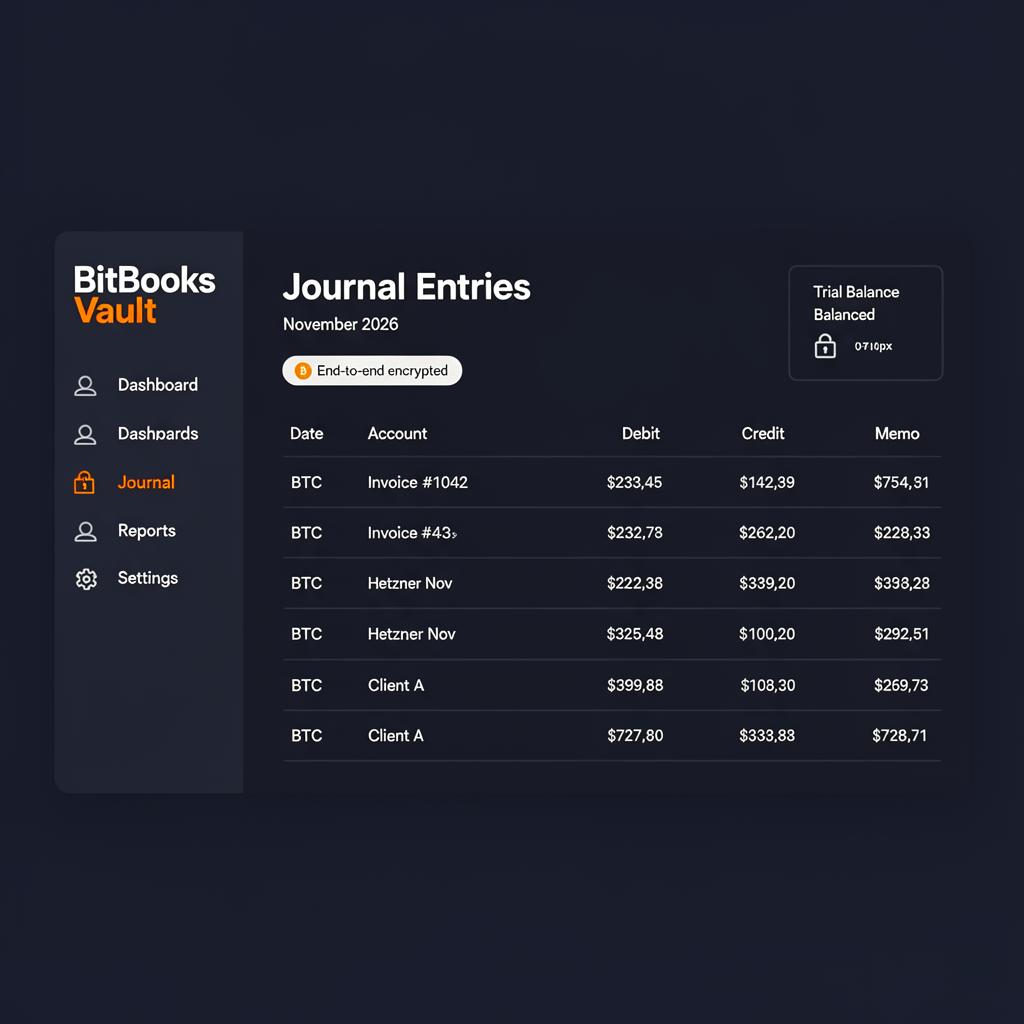
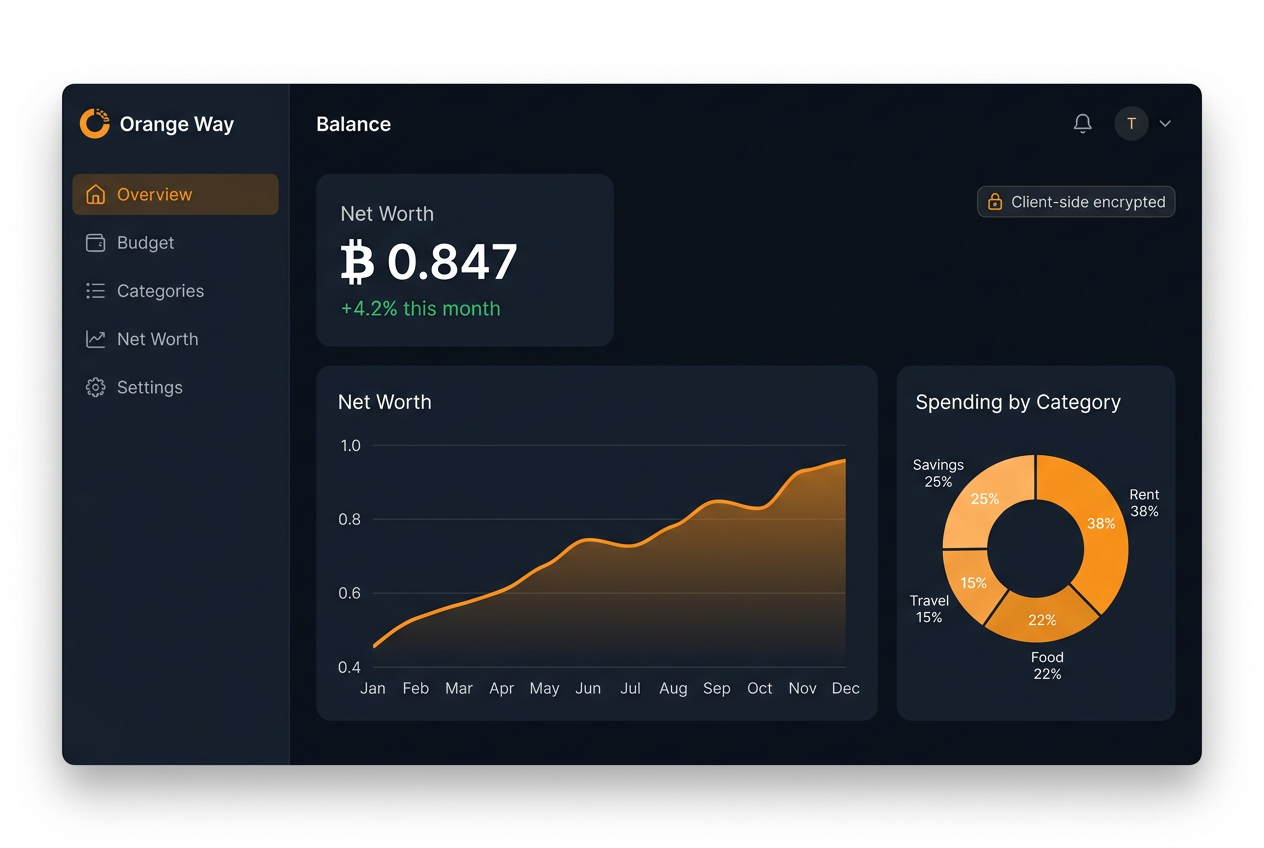
If privacy is outlawed, only outlaws will have privacy.
— Phil Zimmermann, Why I Wrote PGP (1991, updated 1999)

We extend that line: if the only software with privacy is the software dissidents and criminals use, then privacy itself becomes a marker. Mass-deployed, default-on, mathematically-grounded privacy — for everyone, in normal software people use to run normal lives — is the actual freedom-tech mission.